Crucial Interview 002: Chris Fritton
Chris AKA The Itinerant Printer is a working artist & author based in Buffalo, NY that specializes in letterpress printing.
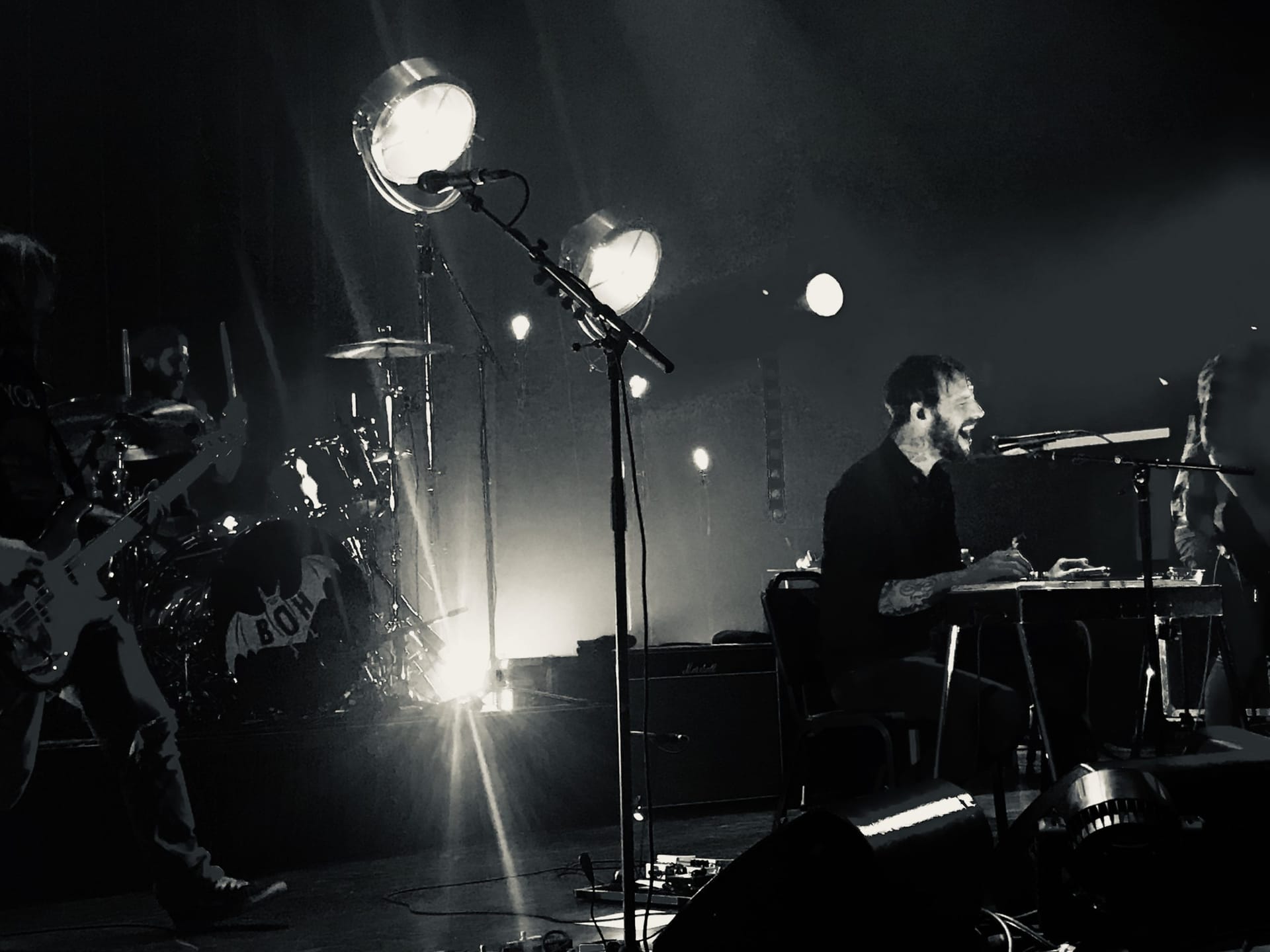
I suppose I should start by introducing myself: I’m Chris Fritton, the other half of the Crucial Tracks team. I’m a working artist & author based in Buffalo, NY, that specializes in letterpress printing. I recently wrapped up a ten-year-long traveling project called The Itinerant Printer, where I criss-crossed North America visiting print shops, then wrote a book about it, then traversed the continent all over again touring the book. During that time, I spent countless hours on the road listening to music, listening to podcasts about music, and watching live music in dozens of cities, as well as making gig posters for the bands that I love.
Even though my life has taken a winding path, music has always been a constant; no matter where I lived, what job I had, or who my friends were, music was a part of my life. I’ve been skateboarding for almost four decades as well, and that’s the only other thing besides music that’s been a continuous presence – so after forty years, I think it’s high time for me to take a look at the songs that made me who I am today, and how they came into my life.
First, a note: this is going to be a completely unvarnished view of my musical taste and the songs that affected me. It’s not going to be some pretentious list of deep cuts that no one’s ever heard of, and it’s definitely not going to impress anyone. This is a story; the story of my life in music.
I debated about the best way to tell the story, and settled on chronological (in relation to when things came into my life, not necessarily when the albums/songs came out). So, let’s begin at the beginning, shall we?
I really started to “notice” music when I was about six or seven years old. Of course, I had no musical taste yet, so I just listened to what my parents listened to. Enter: Kenny Rogers. My mom always played his records around the house, and as a little kid, I became strangely infatuated with The Gambler movies. I was fascinated with how his songs told a story, then the story played out on the screen. Predictably, based on my mom’s love and my newfound fascination, my first concert was Kenny Rogers at the Buffalo Memorial Auditorium on August 30, 1984. I’ll bet you’re expecting me to list The Gambler as my first song right? You gotta know when to hold ‘em/know when to fold ‘em, right? Guess again. Not even close. It’s “Islands in the Stream.”
Until I heard this duet with Dolly Parton, I don’t think I really understood that two people could sing a song together, or sing it to one another. I was obsessed with the way Dolly & Kenny were “talking” to each through song. When I went to the concert, we sat up in the nosebleed seats, they were literally made of concrete, and it was 100 degrees, at least. My mom kept putting ice cubes down my shirt to keep me cool. And I waited for Islands in the Stream. And waited. And waited. And he never played it…until the encore. There I was, losing my little mind as the music started, and then, to my absolute dismay: no Dolly. No Dolly Parton. Some woman I did not know got on stage and sang Islands in the Stream with Kenny, and I was so disappointed. Still, this is where my musical journey began.
Dolly Parton/Kenny Rogers: Islands in the Stream
We had a hi-fi in our house, a piece of furniture with a record player, speakers, and a stereo all-in-one. My mom was a waitress, so she’d work late at night, then get up in the early afternoon and clean house, do laundry, etc. While she was cleaning house, she’d always put records on, and if I was home, she’d dance with me. She’d put my little feet on top of her feet and bop around, holding my arms, or she’d reach down and grab my hips, and move them in time with the song; she’d say “like this – on the beat.” I’ll always remember her cranking the volume up and blasting her way through some mundane task. That’s when I learned that music wasn’t just about storytelling, it was also about emotion. Cue my mom’s favorite housecleaning band: Journey.
The first time I heard Wheel in the Sky I was absolutely dazzled by how complicated it was – building from this melodic intro into something so mountainous, so lush; it was like being wrapped in a blanket of sound, sitting on the floor in front of that hi-fi, watching my mom dance through folding the clothes. It just swallowed me up whole. I’d been listening to Kenny Rogers stripped down, clean-country delivery, and here comes this full-on, multi-track cascade of rock. And Steve Perry’s voice? I was like: mom, humans can sound like this?
Journey: Wheel in the Sky
Honorable mention in this category: Chicago, You’re The Inspiration. Peter Cetera also doesn’t sound human, in the best kind of way. My mom used to sing me this song while holding me on her hip, spinning in a circle, and I felt so special & loved. I think I’ve been chasing that feeling for the rest of my life.
Chicago: You’re The Inspiration
After cutting my musical teeth, I did start to develop my own taste, influenced by what I heard on the radio and by the new-fangled audio-visual powerhouse that was MTV. I’d save up a little bit of money to buy a 7” single or a tape – the first record I owned was STYX: Mr. Roboto. The first two tapes I owned were Kool and the Gang: Emergency, and Tears for Fears: Songs from the Big Chair. I loved the echo-y, reverb-driven, pop new-wave anthem, Shout. I think this is when I really started to understand that there were multiple genres of music, and started to grasp that they made you feel different ways – I was able to identify how songs made me feel, but more than that, I was able to identify what I wanted to listen to when I felt a certain way. That became so important so fast as I approached adolescence.
But first, a tiny digression from the timeline: for much of my early childhood, I lived in the country and had to take a school bus into town, and the bus ride was long. I used to sit up front, and the older kids would sit in the back. I’ll never forget the day a kid named Alec got on the bus with a huge boombox, sat down all the way in the back, and turned on Led Zeppelin. I’d never heard anything like it, and I will never, ever forget what song it was: Over the Hills and Far Away. When the drums came in at about a minute and a half, I just sat in the front seat with my mouth open. I felt like I couldn’t even see. It filled the whole bus from back to front, top to bottom, and everyone just say in silence, listening. That started a love affair with Led Zeppelin that continues to this day, who are arguably one of the greatest rock bands of all time. And I will argue with you about it.
Led Zeppelin: Over the Hills and Far Away
I started skateboarding right around this same time, 1985, and that catapulted me into a world full of other kids, kids who were a lot older than me, and who had musical tastes that had been shaped by the skating subculture. It was only a matter of weeks before I was introduced to punk/metal bands like Suicidal Tendencies, DRI, JFA, and more. We’d be skating in someone’s driveway, a little cassette boombox ripping out tunes, and I’d try to act as cool as a nine or ten year old can, and I’d squirrel away what we were listening to: TSOL, Misfits, King Crimson, Black Sabbath, Minor Threat, and so, so much more. I started buying skate magazines, and the backs were filled with ads for music, and I logged all those names away too. When I’d finally saved a little more money, the first chance I got I headed to the record store and bought DRI and Suicidal Tendencies tapes. Quite the departure for a ten-year old who just two years prior was crying about Dolly not coming out for Islands in the Stream.
To the point though: this is when I learned that music could express negative emotions as well as positive ones; I could feel the anger, the angst, the frustration – and even though I was incredibly young, I was getting a sense of how the world worked, that it wasn’t all it was cracked up to be, and that a lot of those negative emotions were probably the result of a fucked-up system. After all, I’d recently found out there was no Santa Claus. If you know anything about Suicidal Tendencies, you probably think the logical selection here is “Institutionalized.” But that song didn’t really affect me; you might notice that a lot of the songs on my list are the first song on the album. They were often the ones that affected me the most, the ones that I’ll always remember.
Suicidal Tendencies: Master of No Mercy
Another small digression: one of my friends who skated had an older brother who also skated, and I always remember that his room was covered with Iron Maiden posters. I loved the gruesome cartoon-y visuals of Eddie, and it seemed like every time we walked by his room, some kind of blistering metal was pouring out. That’s when I first heard what I still think is one of the greatest metal songs ever made, that still affects me to this day.
Iron Maiden: Run to the Hills
Now, here’s where things get a little weird.
I love what I’ve always called the “principle of adjacency.” It’s the idea that sometimes you pick something up in a store, a record, a book, etc., just because it’s next to something else. Because it’s literally, physically, adjacent to something. And that’s how you find new things. So, long before algorithms and long before “suggested for you” lists, I used the principle of adjacency to find new music. Basically, I just “browsed.” And when you browse, you just look at the album covers. If you’re a straight teenage boy, what’s gonna catch your eye? If you said boobs, you are correct. It was boobs. Enter: The Pixies: Surfer Rosa. I’d been looking at that cover for months, trying to muster up the courage to buy it, and although the record store had put a little sticker over the boobs on the cover, I knew what was going on under there. Did I know what the band sounded like? No. Did I care? No. One day, I finally went for it. And when I got it home, I was right, boobs. But after one listen, I couldn’t have cared less about the boobs. I think my actual brain chemistry changed. I thought to myself: how can music possibly be all of these things? It’s pop, it’s punk, it’s country, it’s noise, it’s chaos, it’s melody, it’s everything at the same time and like nothing I’ve ever experienced before. I remember thinking specifically: “this is art.” I really had no idea what art was, but I had some notion that it was something as courageous and powerful as Surfer Rosa. That tape didn’t leave my walkman for months. Honorable mention here: I went backwards and found their EP Come On Pilgrim, which blew my mind too, so if River Euphrates didn’t exist, I’d have to pick: Isla de Encanta. If there was a way to put almost every Pixies song from the first four albums on this list, I would.
The Pixies: River Euphrates
I’m not going to lie to you, I was precocious. And maybe annoying. But, I was thoughtful. I was always trying to read and listen to things that were well beyond my years, but I’m glad I tried, because it opened my eyes to mortality, oppressive systems, inequality, the trappings of capitalism, and more. If there’s a single band that guided that journey for me, as I’m sure they did for many others, it was the Dead Kennedys. That’s when I learned that music could be political. Not just storytelling, not just emotional. It could be used as a tool to convey information and raise awareness. If you’re in love with capitalism or have no idea why you work ceaselessly under the yoke of an unforgiving system, listen to the Dead Kennedys for a month, it’ll cure you. You’ll come out the other side a changed person. I did. And I was only 13.
Dead Kennedys: Holiday in Cambodia
I can’t leave out Bad Religion, even if it puts me over my limit. They taught me that it’s good to be smart, and there’s an incontestable power that comes with knowing what the fuck you’re talking about. And they know what the fuck they’re talking about. And, hands down, they fit the most unimaginable vocabulary words into punk songs. I mean, come on:
Let’s gather round the carcass of the old deflated beast,
We have seen it through the accolades and rested in its lea,
Syntactic is our elegance, Incisive our disease,
The swath endogenous of ourselves will be our quandary,We’ve nestled in its hollow and we’ve suckled at its breast,
Grandiloquent in our attitude, impassioned yet inept,
Frivolous gavel our design, Ludicrous our threat,
Excursive expeditions leave us holding less and less,So what does it mean?
That’s fucking poetry. If the Dead Kennedys make you question/hate politics and government, Bad Religion makes you hate consumer capitalism and question the meaning of life in an incredibly existential way. The title says it all:
Bad Religion: The Positive Aspects of Negative Thinking
About this time, I was discovering hardcore music through friends, and it checked a lot of the boxes: it was loud, it was angry, it was full of discontent, but it was also personal, political, and everything in between. I went to my first hardcore show when I was 13: Gorilla Biscuits, Outface, and Mind War at the River Rock in Buffalo, NY. I’ll always remember my friends Larry & Eric showing me what it was going to be like at the show; we “practiced” in my room as they explained what moshing was, how people were going to be smashing into each other and me, and they pushed me into the edge of my bed and the walls of my bedroom. They were like, “it’s going to be like this, but ever crazier.” And I was like: “no way.” I was wrong. It was fucking insane. But, I loved it. There should be a hundred hardcore songs on this list for a hundred different reasons, but I’ll just pick one from my first show.
Gorilla Biscuits: New Direction
About this time, and for the next few years, I got deeper into skating than I’d ever been, and the influence that it had on my musical taste is immeasurable. Skating is so comprehensive, so complex, so all-encompassing, so all-inclusive, so diverse; it comprises art, fashion, music, politics, cultural production, and everything in between. Some of the most interesting, edgy, and controversial people started off in the skateboarding scene, as skaters, as videographers, as graphic designers, as directors, as writers. What they were doing in that space was so avant garde, so out there; there were no guardrails, no one telling them what they could and could not do, so they tried everything. If you think skateboarding is just about skateboarding, you couldn’t be more wrong. Skate videos were, and are, a treasure trove of music and experimental video and conceptual art. I’d hear songs I’d never heard from bands I’d never heard of, and I’d run to the record store the next day to buy the tape – sometimes, for better or worse, because the rest of the album wouldn’t be anything like what I’d heard. Bands I found through skate vids could fill a whole book, but I don’t know if anything can top when I heard Dinosaur Jr. for the first time in G&S Footage.
G&S footage
Dinosaur Jr: The Wagon
Dinosaur Jr. touched something in me that I didn’t even understand was there; it was so raw, so unpolished, so churning and visceral, every inch of the song was full of emotion, and J. Mascis’ voice was so powerful yet so fragile – but it was something more than that: he couldn’t sing, but that didn’t matter. It didn’t matter, because all I cared about was that he wanted to sing. Something inside me clicked, and I realized that 90% of what I listened to wasn’t because it was objectively “good,” it was because it was urgent, it was spontaneous, the musicians wanted to be there, needed to be there and even if they couldn’t sing or play their instruments, they were going to put their message in the hands of the people and move on, or exorcise their demons while you watched, mouth agape, empathizing from the sidelines. I could hear them yearning for something, and all I knew is that I was yearning for something too, but I had no idea what it was.
In case you haven’t guessed, this cued the inevitable wellspring of teenage angst that most people encounter, from existential dread to emotional instability to spiraling hopelessly into a bottomless pit of “what does it all mean.” I don’t intend for that to sound trite or condescending; I still feel the same most days, thirty years later, and it’s not something you shake off easily. But I always had music to support me. I’d listen to people who were clearly on the same emotional journey as me, and I’d follow along as they worked it out (or didn’t) and try to mine their experiences for clues about how to navigate my own travails. My friend Joe and I were fond of deep dives into these subjects, so it’s only fitting that he’s the one who introduced me to Joy Division. He’d found them through a skate video, bought the tape, and one day we were driving along in his black Chevy Corsica, and he popped it into the stereo, and he was like: “you have to hear this; it’s fucking weird, like nothing I’ve ever heard.” And on came Shadowplay. And he was right.
Joy Division: Shadowplay
During this time, I was still on a steady diet of punk, hardcore, metal, and all kinds of other underground music, hundreds of bands that I’d wake up to and go to sleep with – thousands of songs that became the soundtrack to my early high school life. But here’s where I departed from my peers, and I’ve never really understood why: I started to listen to “girly” music. In my head, it just stood to reason: I liked girls, girls made music, I was going to listen to it. My friends were pretty unforgiving and relentless when it came to ridiculing me for listening to Sarah McLachlan, The Sugarcubes, Mazzy Star, The Breeders, PJ Harvey, and hundreds of other pop stars, singer-songwriters, and female-fronted bands. I think for me, it was a welcome respite, hearing songs crafted in a different way, from a different perspective, one that I deeply wanted to understand. I’m sure that a lot of my motivation was bound up in trying to parse and make sense of sexuality, sensuality, gender, relationships, love, but I’ll never know for sure. What I did know for sure is that I wanted a rounder, fuller experience of music (and the world), and I was getting it, and my friends who shit on me for listening to “girly” music weren’t.
Sarah McLachlan: Possession
Mazzy Star: Ride It On
To the same end: Kim Deal is an absolute icon in my mind, crafting an idiosyncratic sound like no other, approaching music in a meticulously refined yet brutally elemental way. And that voice. So peculiar. The Breeders will always be on this list, and although I loved the album Pod, the Safari EP always moved me in a way I can’t describe.
The Breeders: Safari
I’m not trying to be too romantic or nostalgic or clumsy about this, but at that point in my life, girls were a mystery, and they were something to be “figured out.” So, I thought to myself, what better way to figure them out than by listening to them. They were right there, telling us their stories through music, and all I had to do was listen. Maybe this came naturally to me; my parents got divorced when I was nine, and although it was amicable, I spent a lot of time with my mom and her friends, who were all women. I always felt more comfortable around women, their modes of conversation, the way they articulated their feelings. But there was a single day when that deeper listening changed me entirely, and that’s when I found Liz Phair. In 1993, when Exile in Guyville came out, I bought it immediately. Why? Boobs. There’s a boob on the cover. And, foiled once again, when I popped it in the tape player, the boobs didn’t matter at all. Because instantly I heard the most unflinching, catastrophically honest, horrifically detailed, shockingly genuine music I’d ever heard. It was all bones in the sound, all meat in the lyrics, it was a strange meal of feelings I was completely unprepared for. I just saw her Exile in Guyville tour this year, running through the whole album from start to finish live, and it still makes me feel the exact same way it did in 11th grade. Stupefied, terrified, in love, in lust, intrigued, repulsed, sad, angry, confused, and just…too full of the world, so full of the world that I have no hope but to just get steamrolled by it and try to love the steamrolling.
Liz Phair: Fuck & Run
I spent the rest of high school filling out my musical repertoire with more hardcore, punk, classic rock, and “girly” music while playing in a hardcore band called Contempt. But I was definitely keeping my eye on what was coming next: bands like Fugazi were ushering in an era that would give birth to emo, math rock, indie rock, and more. There’s no way I could leave them off the list – again, a band that when I heard them for the first time, sounded like nothing else I’d ever heard on earth. It was like jazz and prog and rock and punk and hardcore and something else I had no name for…and I’d known Minor Threat, I’d been witness to and participant in the scene, but this was…uncharted territory. No one knew where this ship was going. And no one’s ever done it better to this day.
Fugazi: Repeater
If I look closely at my musical timeline, I realize that a lot of discovery happened in short, two-year long bursts. 1985-87, 1989-91, 1993-94, 2001-2003, 2010-12, and even more recently, 2021-23. If we’re being honest, sometimes it’s a schlog to find new music. It’s really easy to settle into the familiar and stick with what you know, but there’s also a lot of joy to be had in finding something new. But, it feels like phase changes in chemistry – you build up all this potential energy, then change phases, but then you plateau again as you build up more energy. It’s almost like I need the time off in between times of discovery to digest what I’ve taken in, and give myself a break – I often worry that if I were always listening to something “new,” that I wouldn’t be giving the music its due; I’d just be bouncing from one new thing to the next, without really taking it in and letting it make meaning, or making meaning along with it.
I gotta be honest again, I don’t remember much about the late 1990s and the music, it kinda felt like a flat time. Hard to deny the influence of grunge and other bands I loved: Nirvana, Pearl Jam, Mudhoney, but I don’t think they really make the top twenty. Honorable mentions during this time, however, driving around in my friend Eric’s car and listening to Sugar. We’d both known Husker Du and followed Bob Mould as he made Sugar, and we’d listen to Copper Blue over & over, but it was the Beaster EP that really stuck with me. Tilted in unrivaled in its sketchy but calculated power, a wall of sound with a thousand photos and a thousand memories pinned to it.
Sugar: Tilted
So, we’re going to skip ahead to the early 2000s, when things were really happening in NYC. This was when The Strokes, the Yeah Yeah Yeahs, Interpol, LCD Soundsystem, and other bands were having their heyday and ushering in a whole new scene, and I loved them all. I lived in Maine at the time, and I’d head down to Boston, Hartford, and NYC for shows. The return to something irreverent and almost dangerous in music was appealing to me, a throwback to the decadent 70s and 80s. But, I also found something I’d been missing for a while in music: a return to storytelling.
The Yeah Yeah Yeahs made me feel like music could be uncontrolled and uncontrollable again, so they’re on this list.
Yeah Yeah Yeahs: Date with the Night
But bands like Rilo Kiley and Okkervil River made me feel like storytelling could be relevant and powerful again, by being both personal and universal at the same time. I never know the true circumstance of what they’re singing about, or if it’s even real, or if it’s autobiographical, but I do know that when they sing it, it applies to me too. And often, they’re delivering the message better than I ever could. I think Jenny Lewis is a modern troubadour, one of the greatest musical storytellers of all time.
Rilo Kiley: All the Good That Won’t Come Out
Okkervil River: For Real
Around 2003, I found Sleater-Kinney, and I thought to myself: how the fuck did I not know about this band? They were part of the same scene I had been a part of forever, they were making incredible music that was right up my alley, and somehow, they’d slid by under my radar. So, I took a deep dive into these Olympian heroines and came away changed. One Beat will never not be on my list: it feels like the song is going fifty directions all at once while continuously returning to the center, it’s disorienting and pushes you away at the same time it pulls you in; it’s a masterclass in how to make something ostensibly unpalatable palatable by sheer force of will. Again, I could tell they wanted to be there and wanted to be making what they were making.
Sleater-Kinney: One Beat
In a similar vein, geographically and stylistically, I’d loved Bikini Kill for a long time, but when Le Tigre came out, I couldn’t help myself. Here was a band with a punk pedigree that was trying to merge that with a pop/electro sensibility; it was fun, it was wild, it was confrontational, it was intellectual, it was a breath of fresh air, and it changed the way that I viewed how music, and musicians, could evolve.
Le Tigre: Deceptacon
Slight rewind: honorable mentions from around 2001: The Shins. Before I moved to Maine, my friend Christina worked at the Buffalo Public Library, and she’d acquire new music for them. She turned me on to The Shins, Neutral Milk Hotel, and a lot of other stuff that I might not have found. I lived in a small third floor apartment with windows that looked out over the street, old victorian houses that would get covered with snow in the winter – I’ll never forget listening to those songs while staring out across the street, watching the flakes stack up and bury the world.
The Shins: Caring is Creepy
You want to talk about storytelling? This fucking guy, Jeff Mangum, is inimitable:
Neutral Milk Hotel: Holland, 1945
If you haven’t realized it yet, death & dying & existential woe is a theme in my life and the music I listen to, so even if it seems like a hack move, it feels impossible not to include Johnny Cash’s rendition of Hurt. A man at the end of a long, complicated, provocative, monumental life examining what he’d done, who he’d hurt, what he’d left behind, what he gained, if anything at all. Thinking about what his legacy was. This song made me want to treat people in my life better, if only to try to avoid that kind of pain, if at all possible.
Johnny Cash: Hurt
Flash forward, 2006:
Band of Horses: The Funeral
To know me as hardly golden / is to know me all wrong
C’mon, that’s just beautiful. I’m not even sure what else to say about this song; another voice that doesn’t seem human. If it doesn’t touch you in some way, you’re probably dead inside. But even if you’re dead inside, it should still touch you, because that’s the whole fucking point of the song.
What about now? What about recently? I recently saw Futura 2000, the graffiti artist, at an event here in Buffalo. When asked about music, he was really frank, and just said: “c’mon, I mean you have to admit it, music doesn’t mean as much when you get older, it’s not the same. I still love music, but it just doesn’t hit the same way it did when you were young.” And in so many ways, he’s right. When you’re going through formative times, the music that heals you or opens up wounds or shocks you or comforts you gets inside your soul. But, as you get older, there are less formative moments, fewer ways to get inside your heart, get inside your soul. The music doesn’t have as many paths in, because we start to close them off. I try not to do this, but it feels like/seems like an inevitable part of growing old. If everything meant as much as it did when I was 13, it’d be unsustainable. The sheer brightness of the world would burn out your eyes over time, so occasionally, and sadly, more often, as you’re older, you have to look away sometimes. I’m still searching for meaning every day, I’m still looking for the people who are telling stories, stories that are relevant to me, I’m still looking for songs that matter, but I’d be lying if I said that they weren’t fewer and farther between now. So, I’ll leave you with a few things I’ve found in the last couple of years.
One, what I think is one of the best love songs in recent memory:
Ezra Furman: My Zero
Two, a band that was always on my psychedelic/classic rock radar, but the hook and fuzzy, blurry beauty of this song can’t be denied:
Status Quo: Pictures of Matchstick Men
Three, a band that is definitely dangerous and makes me feel alive again:
Black Lips: Modern Art
Four, a song from an album that found me at the right time and right place to mean something:
Youth Lagoon: Officer Telephone
Five, a girly band that reminded me why I got into girly music:
Alvvays: Archie, Marry Me
Six, a current artist that gave me a sense of the modern zeitgeist and modern problems and modern attitudes, that when I heard her, I said to myself “ohhhhhhh, that’s how people feel now.” It’s romance deconstructed and obliterated then reconfigured into something new, something somehow hollow and full at the same time.
Courtney Barnett: Pedestrian at Best
Noticeably absent from my list: hip-hop, rap, R&B. Note: it’s not because this music isn’t meaningful to me, or that it hasn’t had a huge impact on my life, but it probably deserves its own post, separate from this one. Only so much space, so much time, so keep your eyes peeled in the future for a top twenty hip-hop list from me.
Listen to this issue of Crucial Tracks
Find this issue’s playlist on Apple Music and Spotify.